Weekly Report - July.12 , 2026
Trading at a 95% discount to its billion-dollar NPV, this fully funded developer is utilizing a disruptive, low-CAPEX playbook to fast-track commercial production by 2027.

Global markets are bracing for a highly volatile trading week following a severe escalation of geopolitical tensions in the Middle East. Over the weekend, the conflict took a direct hit at energy infrastructure, marked by a hostile drone strike on a critical offshore drilling platform operated by the Kuwait Oil Company, alongside synchronized attacks on northern land borders. Critically, this development coincides with the formal closure of the Strait of Hormuz by Iranian authorities following a third round of intense U.S.-Iran military exchanges.
While crude prices have yet to fully price in the structural premium of a physical supply disruption, the math here is unforgiving. The combination of a choked transit bottleneck—through which roughly 20% of the world’s petroleum flows—and rapidly depleting global commercial inventories means a violent upward market reaction is likely inevitable as physical supply chains tighten. We did have some incredibly strong Stage 2 technical breakouts this week, one of which I will break down in full detail later in this report.
Thoughts from the week
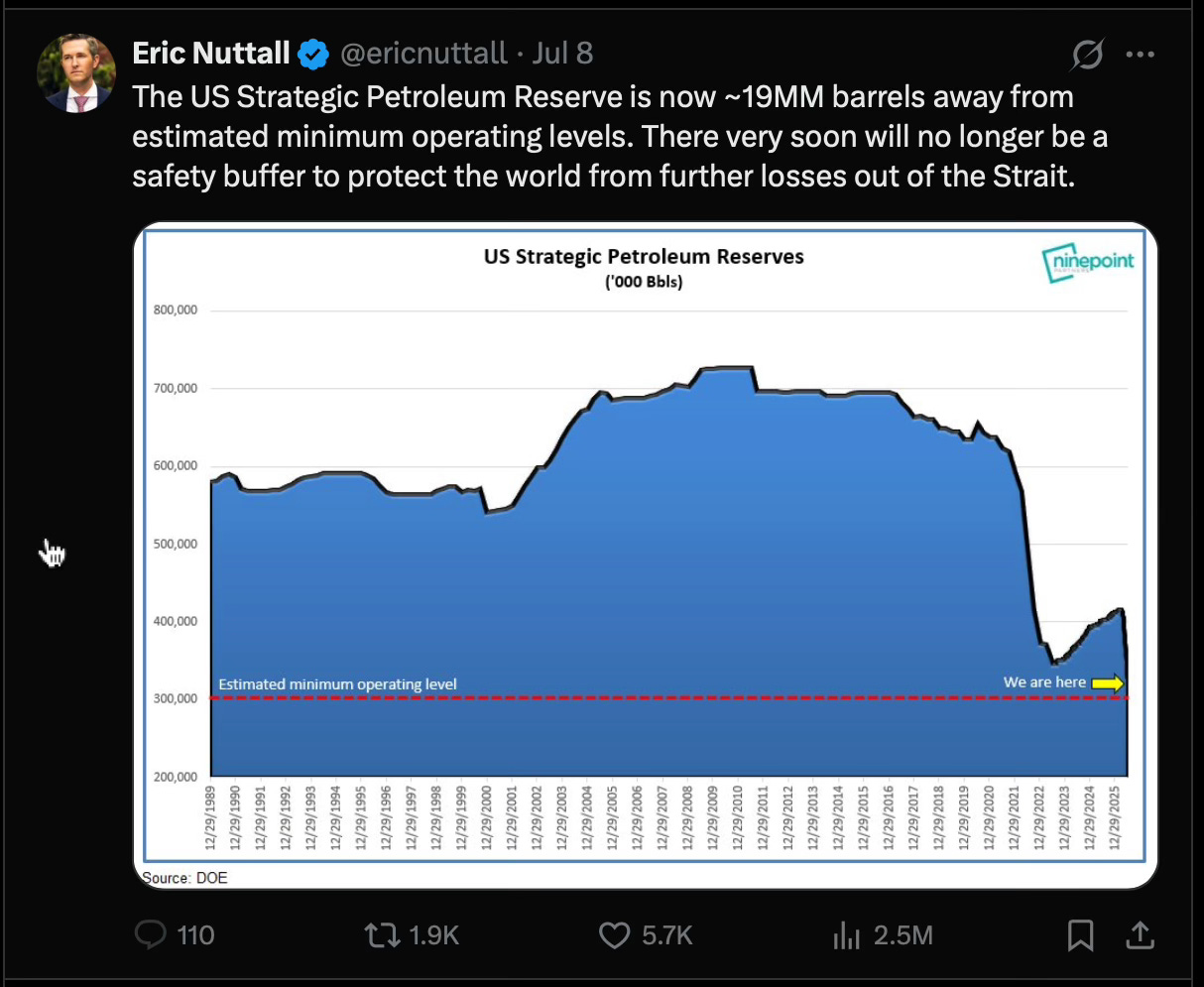
The Death of the Safety Buffer
To understand exactly why the weekend’s escalation in the Middle East is so mathematically dangerous for oil prices, look no further than the state of the U.S. Strategic Petroleum Reserve (SPR).
Energy analyst Eric Nuttall recently pointed out a terrifying reality: the U.S. SPR is now sitting a microscopic ~19 million barrels away from its estimated minimum operating level.
Why is this important, and what does it mean?
The SPR is structurally tapped out: When geopolitical crises hit the oil market, the U.S. government traditionally opens the taps of the SPR to flood the market with emergency supply and artificially suppress prices. However, we are essentially at the absolute bottom of the barrel. You cannot draw down an empty tank.
Physical limitations prevent further relief: The “minimum operating level” (roughly 300 million barrels) isn’t just an arbitrary political line—it is a rigid mechanical and operational threshold. Below this level, the physical pressure required to pump oil out of the cavernous salt domes drops significantly, risking structural damage to the reserve infrastructure and slowing drawdown rates to a crawl.
Zero safety buffer for a Strait of Hormuz blockade: The Strait of Hormuz is the world’s ultimate energy chokepoint. With Iranian authorities formally closing the transit route following this weekend’s military exchanges, the global supply chain has just lost access to millions of barrels of daily supply. In previous decades, Washington would counter this by dumping SPR crude. Today, that emergency release mechanism is effectively dead.
The Takeaway: The structural safety net that protected the global economy from massive energy shocks is officially gone. With inventories severely depleted and the SPR incapacitated, any sustained disruption in the Middle East will flow directly into the price of physical crude. The market has no cushion left.
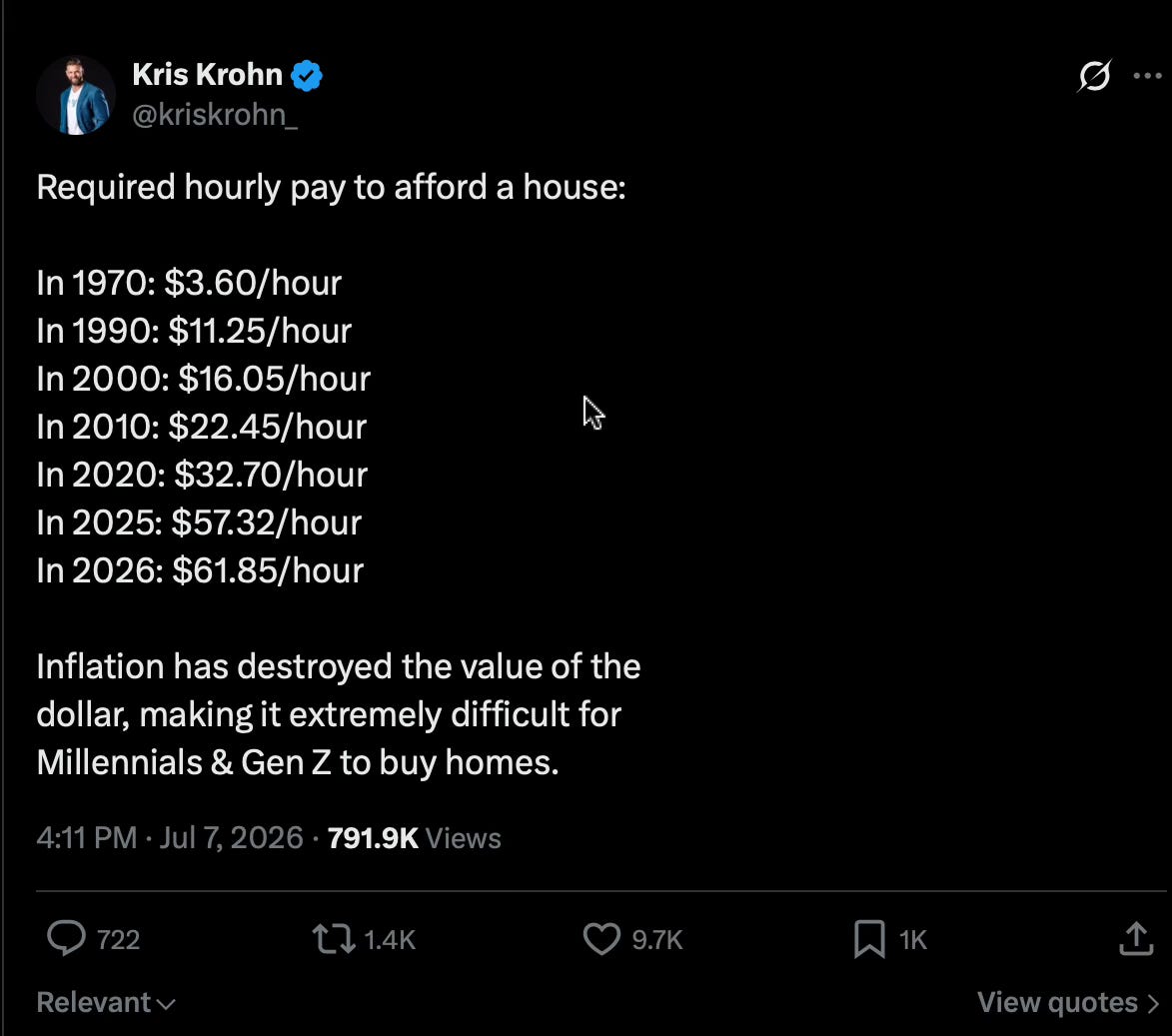
The True Cost of Fiat Inflation
The structural destruction of the U.S. dollar is manifesting itself in a toxic real estate market. Consider the math behind the hourly pay required to afford a home over the last few decades:
1970: $3.60 / hour
2000: $16.05 / hour
2020: $32.70 / hour
2026: $61.85 / hour
The compounding effects of inflation have ruthlessly outpaced wage growth, making homeownership a statistical impossibility for the vast majority of younger workers.
When the fundamental cost of living outstrips median wages by this wide of a margin, a society begins to fracture. The younger generations are realizing they are running on a treadmill that keeps speeding up. In my view, this untenable economic divide is laying the groundwork for a major socio-political revolution. You cannot systematically crush the financial future of the working class without eventually facing a massive, destabilizing pushback that forces systemic change.
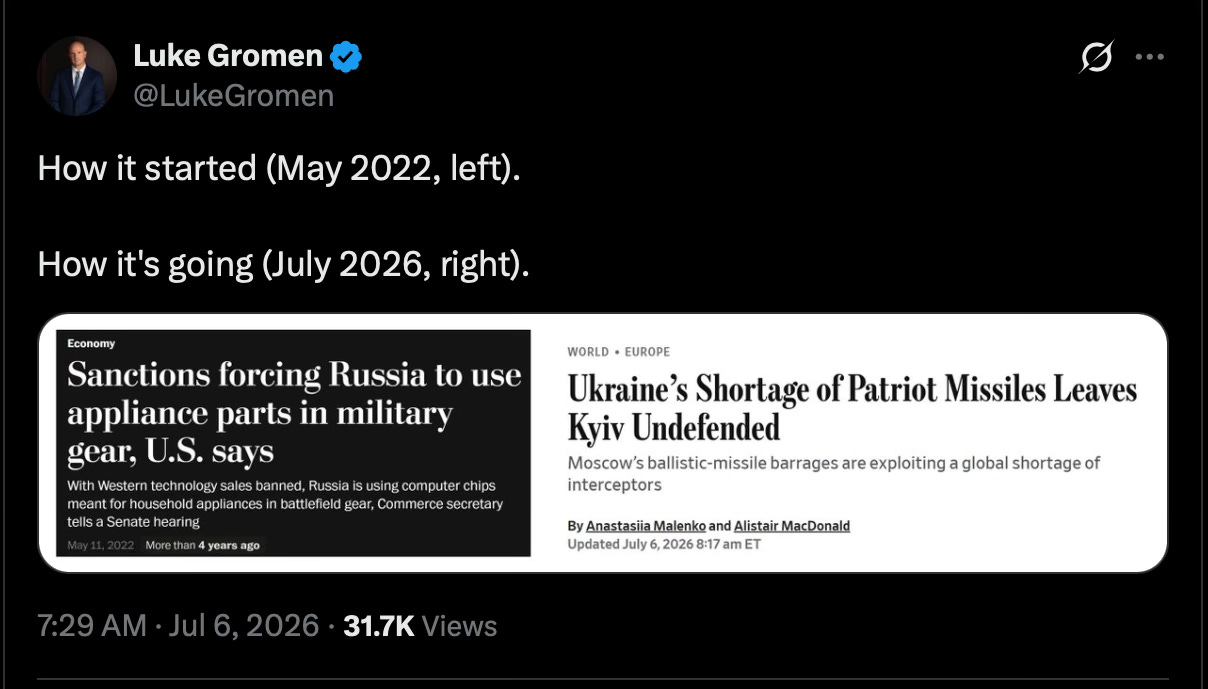
Mainstream Narratives
In May 2022, the official narrative touted by U.S. officials was that Western sanctions had fundamentally crippled Russia’s military capability, forcing them to harvest computer chips from household appliances to patch up their gear. Fast forward to July 2026, and the headline tells a radically different story: a global shortage of interceptor missiles has left major defense lines open to extensive ballistic barrages.
Why this matters for your capital: The mainstream narrative is almost always a lagging indicator designed to appeal to emotion, consensus, and complacency. More importantly, it is almost always weaponized to push a specific agenda. If you invest based on consensus headlines, you are virtually guaranteed to buy at the absolute top of a cycle and sell at the absolute bottom.
Contrarian cyclical investing works because it explicitly rejects the consensus narrative at extremes. When the crowd screams that a sector is dead, that supply will never recover, or that a dynamic is permanently fixed, a cyclical investor looks at the underlying capital expenditure (CapEx), structural bottlenecks, and multi-year supply/demand realities. By remaining fiercely independent from the consensus tape, we position ourselves in deeply unloved, mispriced assets—like the ones we track in commodities and juniors—right before the reality of the cycle inevitably forces the narrative to pivot.
The 2027 Production Story Trading at a 95% Valuation Disconnect
This week, we are diving deep into a junior developer sitting on a multi-billion-dollar project in a world-class jurisdiction. What makes this story so unique is that management has completely thrown out the traditional, bloated mining playbook. Instead, they are adapting agile engineering from an entirely different sector to bypass hundreds of millions in upfront capital costs, paving a remarkably fast runway to commercial production by early 2027.
The asset is fully funded for its near-term roadmap, the equity is currently trading at a staggering 95% discount to its net present value. If you want a textbook example of an asymmetric setup with an immense structural margin of safety, this is it. Let's break down the exact math, the disruptive tech, and the timeline below.