Weekly Watchlist - Jan.11, 2026
I am seeing alot of buzz about "commodities supercycle", it was a great week for the portfolio all around. I continue to see great opportunities in the market.

Homeland Nickel - Market Cap $22 Million Canadian
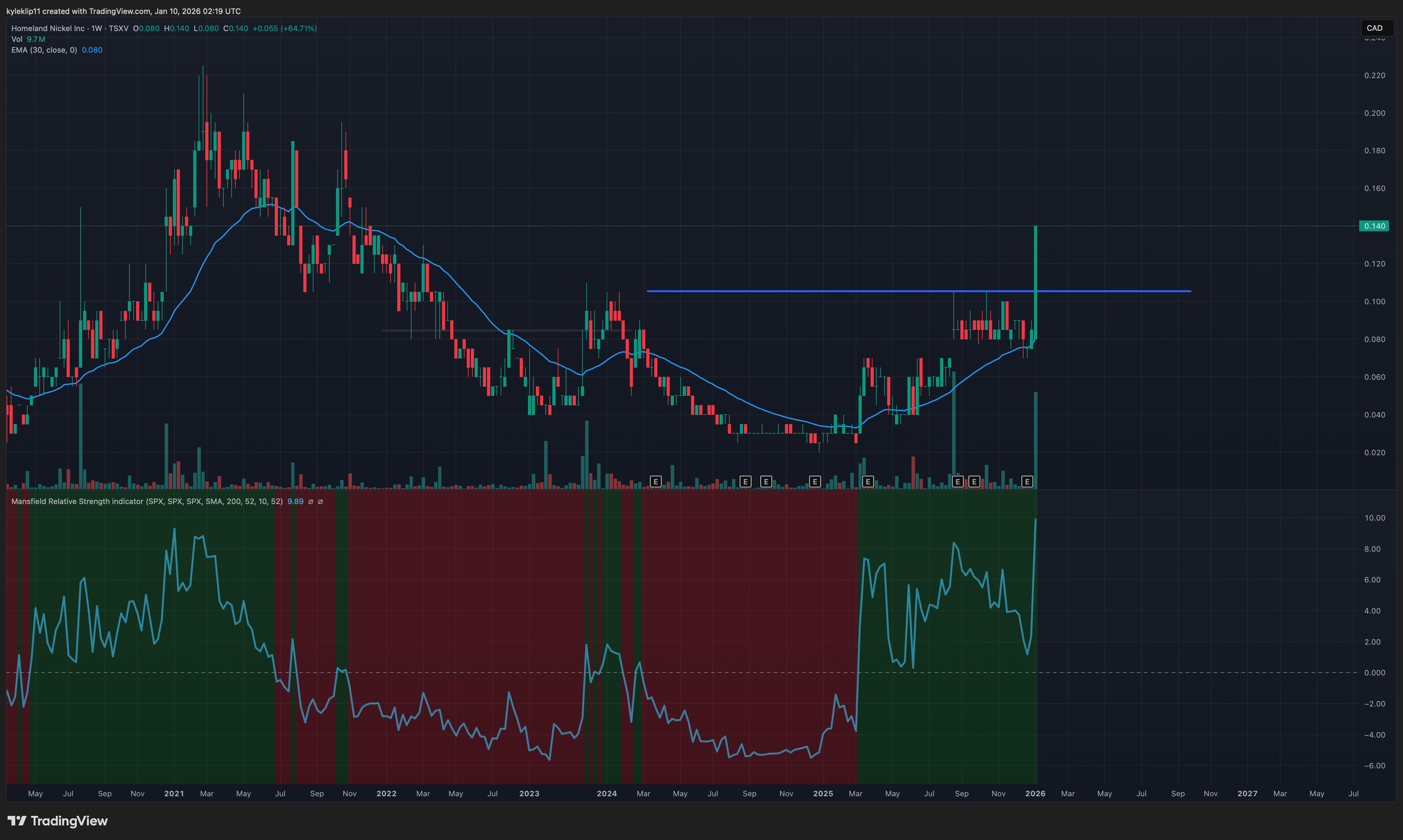
I had not heard of this company until late this week, but it quickly caught my attention. The chart looks strong, with significant volume entering the stock, and the share price rose more than 40% on Friday. From a technical perspective, this move appears to be a major breakout.
The company owns several nickel projects in the United States, including the Cleopatra Project in Oregon. This project reportedly had a historical mineral resource estimate of approximately 40 million tonnes grading 0.93% nickel, based on drilling completed between 2007 and 2009. With nickel prices trending higher recently, that could help explain the renewed market interest in a story like this.
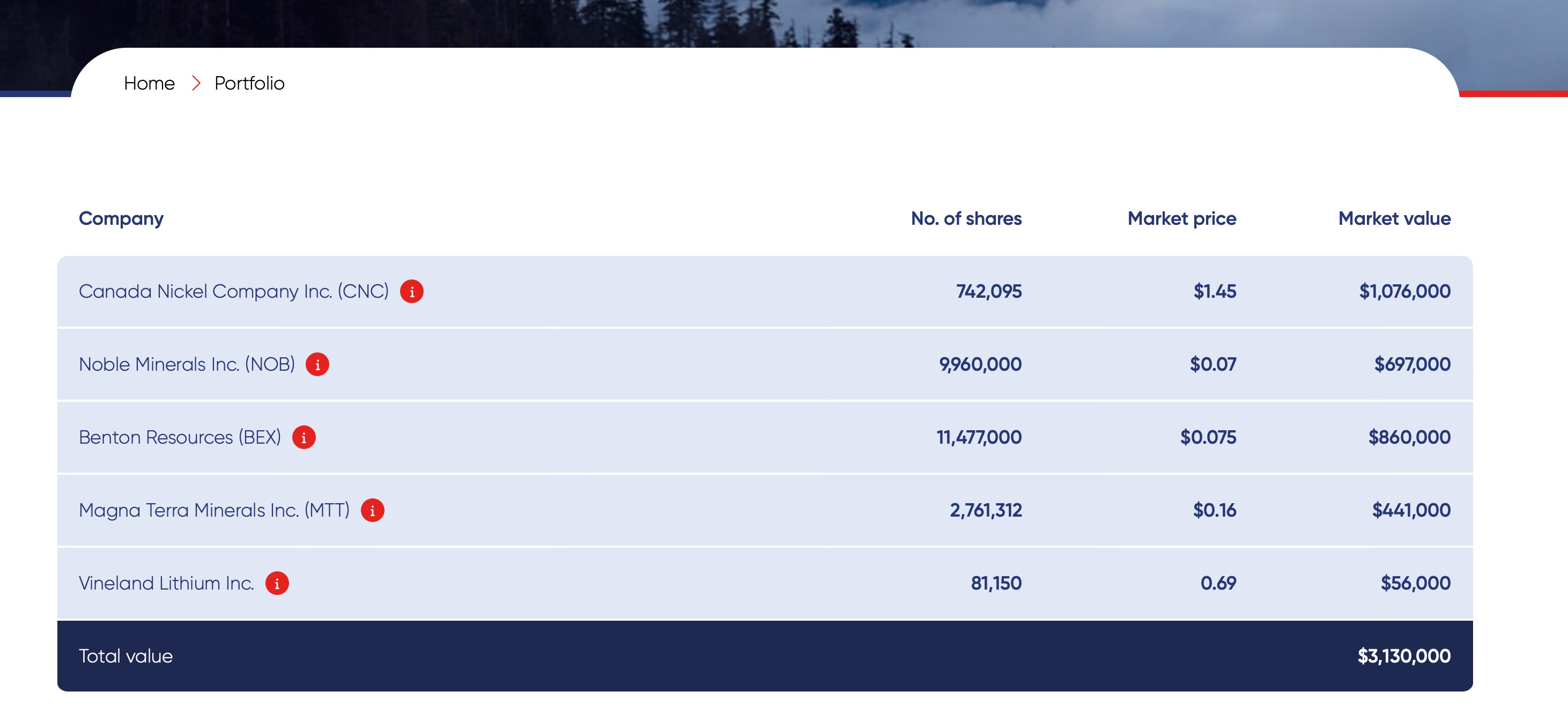
In addition to its mining assets, the company also holds a portfolio of investments in other familiar public companies, which may provide additional underlying value and support to the overall story.
Verde Agritech - Market Cap $70 Million Canadian
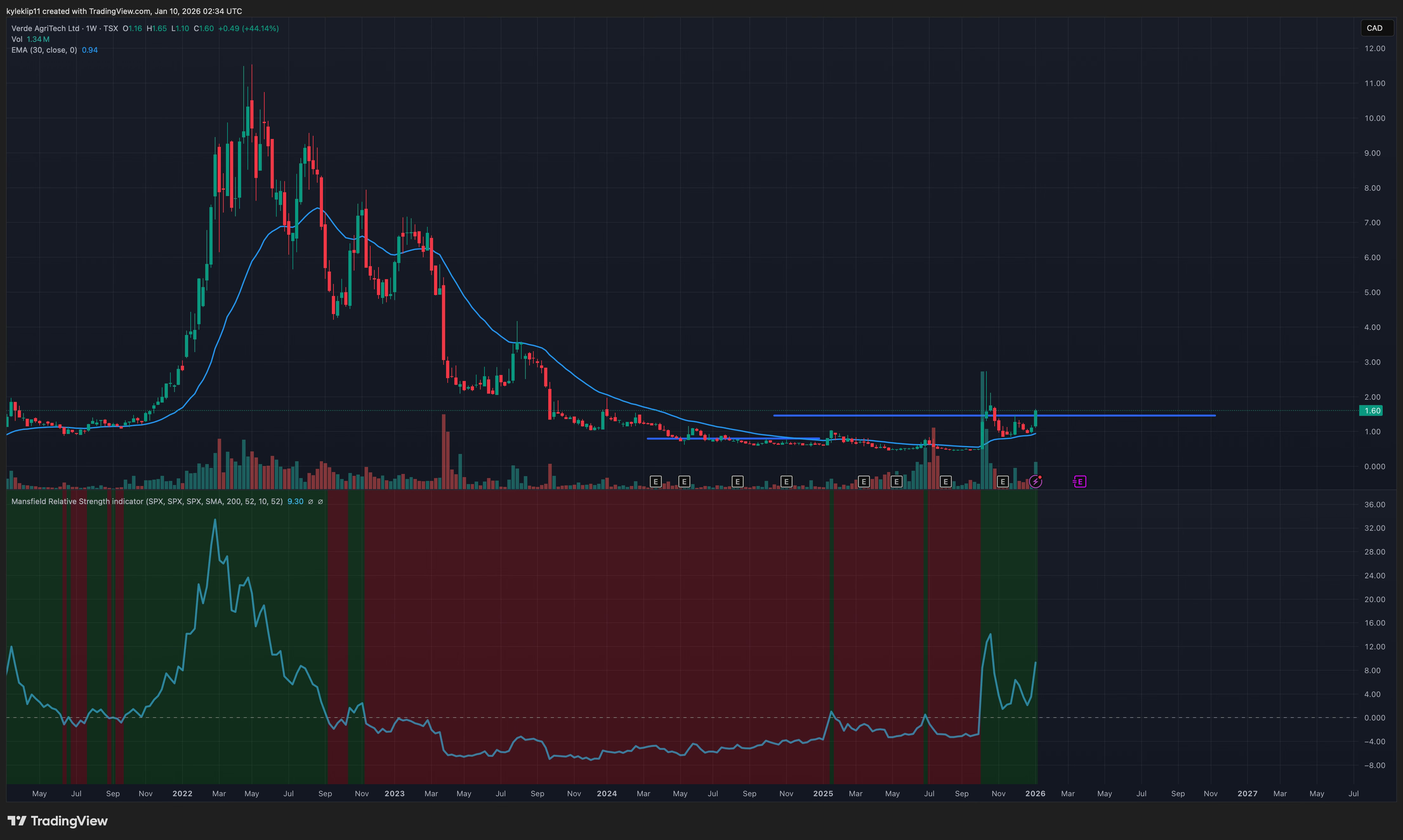
This was an excellent setup the last time fertilizer prices surged, and historically when potash/fertilizer catalysts align, Verde’s stock can move quickly. Recently, the stock has shown signs of life, breaking above near-term resistance on high weekly volume, which could indicate renewed interest from investors.
Verde AgriTech is an agricultural technology company focused on producing multinutrient potassium fertilizers. Its products are mined, processed, and distributed from its facilities in Minas Gerais, Brazil. Verde is fully licensed to produce up to ~2.8–3.0 million tonnes per year of its fertilizers, and in 2022 became Brazil’s largest potash producer by capacity. 
However, despite this installed capacity, the company has historically produced and sold far less than the theoretical maximum, in part due to weak market demand over the past couple of years.
Several macro factors have weighed on fertilizer demand in Brazil:
• High input costs in 2021–2022 squeezed farmer margins, slowing purchases of fertilizers.
• Brazil’s central interest rate rose sharply, reaching historically high levels, which made credit expensive and constrained farmers’ working capital. 
• Many farmers accumulated debt or insolvency pressure after high costs and weather challenges.
• Drought conditions and other climate stresses reduced crop output and further pressured farm finances.
These combined factors slowed fertilizer purchases and constrained Verde’s sales volumes in recent years.
Brazil is one of the world’s largest fertilizer importers — historically depending on foreign sources for over 95–97 % of its potash needs. Verde’s domestic production offers a locally sourced alternative, potentially reducing reliance on imported potash. 
As global potash prices fluctuate, recovery in farmer buying could translate into meaningful increases in sales volumes if leverage improves.
In addition to fertilizers, Verde is advancing a district-scale, clay-hosted rare earth discovery in Minas Gerais, Brazil. Drilling and exploration have been underway, with the company accelerating efforts to define the resource. The project has not yet released a maiden resource or PEA, but guidance suggests these could come in late 2025 into the first half of 2026. 
This rare earth asset — if economically defined — could represent a second potential growth driver beyond the core fertilizer business.
Puma Exploration - Market Cap $32 Million Canadian
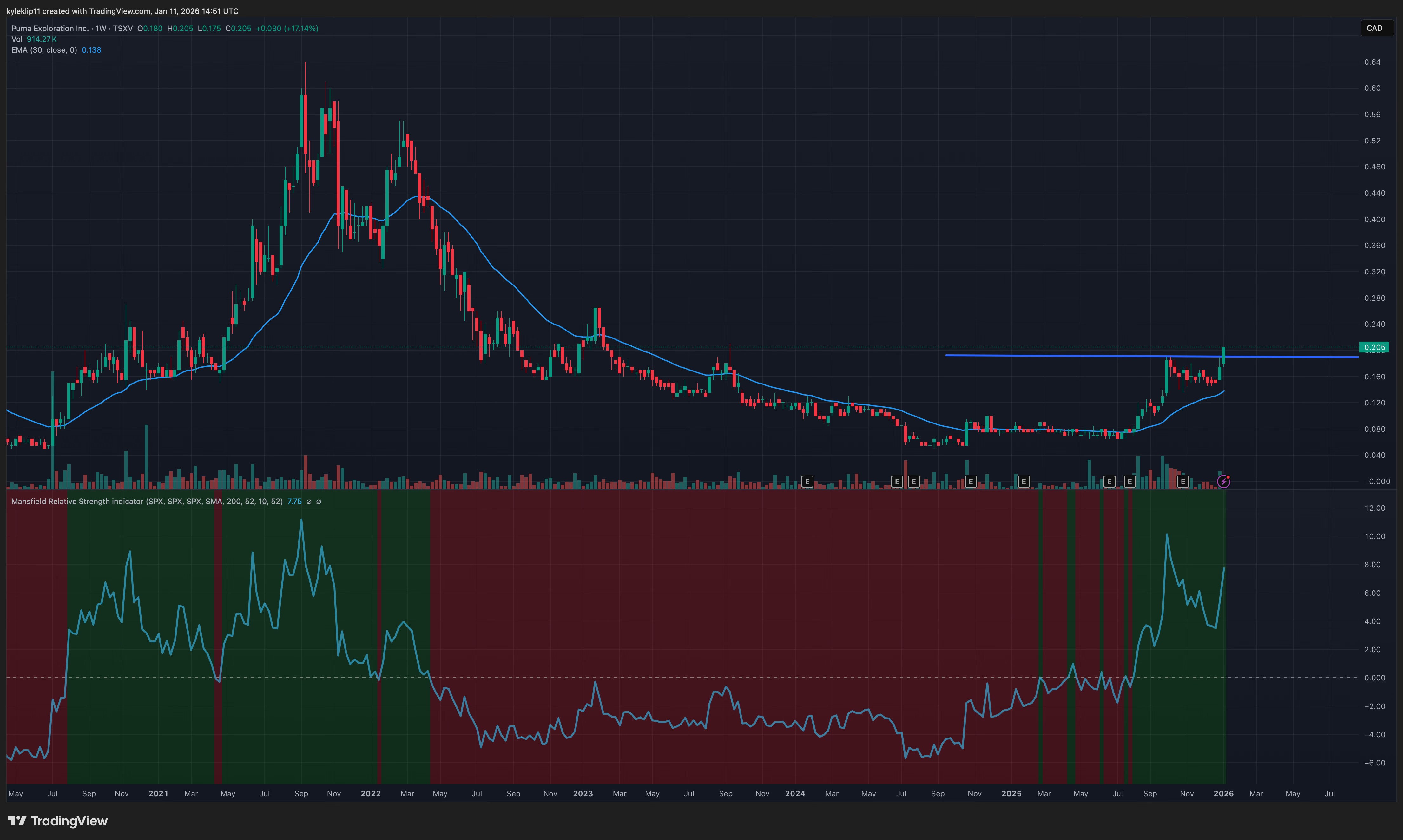
Puma looks ready for another run, having recently broken out of its short-term consolidation zone. The stock has performed well since late last year, and in the current gold price environment the juniors are finally catching up to larger producers as investors rotate back into exploration stories.
The company’s flagship focus remains the Williams Brook Gold Project in Northern New Brunswick, one of the more compelling grassroots gold plays in Canada. Puma holds a ~40,225-hectare land package that includes Williams Brook and related properties such as Jonpol and Portage — all strategically situated near the Rocky Brook Millstream Fault, a major structural corridor known to control orogenic gold deposition in the region. 
A major catalyst for Puma has been the strategic partnership with Kinross Gold Corporation. Under an option agreement signed in late 2024, Kinross can earn up to a 65% interest in the Williams Brook Project by funding a minimum of C$16.75 M in exploration over five years, including a firm commitment of C$2 M and at least 5,000 m of drilling in the first 18 months. Puma continues as operator with input from a joint technical committee. 
Kinross recently exercised its right to increase its equity stake in Puma to nearly 14.8% on an undiluted basis through participation in a private placement. This strategic investment by a major producer acts as an important endorsement of Williams Brook’s potential. 
In addition to Williams Brook, Puma is actively advancing the McKenzie Gold Project, also in Northern New Brunswick. Surface sampling at McKenzie has returned very high gold values (e.g., up to ~126 g/t Au) and Puma initiated its inaugural drilling program in late 2025, even adding a second drill to expand coverage. 
Puma just wrapped up its 2025 drill campaign at the Lynx Gold Zone, the most advanced target at Williams Brook:
• A total of 3,662 m was drilled in 15 holes at Lynx, with visible gold (“VG”) observed in six holes. 
• Notably, visible gold was intersected as deep as ~355 m downhole, the deepest such occurrence recorded at the project so far. 
• Step-out drilling has expanded the known mineralized footprint, with the Lynx zone now interpreted to extend ~800 m along strike, ~50 m wide and ~250 m vertically — and it remains open in multiple directions. 
• Assays are still pending for most of this program, but the presence and distribution of visible gold in multiple holes is encouraging and suggests continuity of the underlying gold system. 
Previous campaigns at Lynx have shown robust, coherent mineralization:
• Historical drilling defined broad zones of gold mineralization with both high-grade and lower-grade envelopes amenable to exploration scaling up. 
• Puma’s systematic surface sampling and trenching has also identified multiple gold showings across the property package, indicating the potential for a district-scale system rather than a single isolated zone. 
At McKenzie, Puma’s initial drilling follows up very high-grade surface samples identified earlier in 2025. This project could act as a second growth vector if drill results confirm a substantive new gold system at depth. 
• Kinross’ involvement provides both funding and geological expertise, significantly de-risking Williams Brook relative to typical junior explorers. 
• Assay results from the 2025 drilling program are a key near-term catalyst. Visible gold occurrences often correlate with higher grades.
Disclaimer
The content on this website is provided for educational and informational purposes only and does not constitute financial, investment, or other professional advice. Nothing contained on this website should be construed as a recommendation to buy, sell, or hold any security or financial product.
The author is not a licensed financial advisor or broker-dealer. The author may hold positions in securities mentioned and may change those positions at any time without notice.
All information is provided in good faith; however, we make no representation or warranty, express or implied, regarding the accuracy, adequacy, validity, reliability, availability, or completeness of any information on this website. Content is provided “as is” and may contain errors or omissions.
Past performance is not indicative of future results. Investing involves risk, including the potential loss of principal. You should conduct your own research and consult with a qualified financial professional before making any investment decisions.
Under no circumstances shall we be liable for any loss or damage (including financial loss) incurred as a result of the use of, or reliance on, any information provided on this website. Your use of this website and your reliance on any information is solely at your own risk.